

Category
What Hail Actually Does to Your Roof (And Why Small Hail Is Often the Bigger Problem)
9 minute Read

Posted 9.10.26

After a storm rolls through, it is natural to walk outside and check for obvious signs of trouble, like dented gutters, stripped tree branches, or shattered windows. But hail damage to your roof is often much harder to spot, especially when the hailstones themselves were small. Hailstones can reach speeds up to 120 mph, so even stones that seem small can leave behind impact marks and real roof hail damage. Some of the most costly roofing problems start with a storm that barely made a sound. That is exactly why it helps to take a closer look at what’s covering your home after any storm, no matter how minor it seemed at the time, especially for homeowners in Des Moines and surrounding areas where seasonal hailstorms are common.
What you’ll learn in this guide:
- How hail actually damages roofing materials, even when it looks harmless
- The difference between cosmetic marks and real functional damage
- Warning signs worth checking for after any hailstorm
- Why smaller hail can sometimes cause more long term harm than large hail
- What steps to take next if you suspect your roof was affected

Why Hail Damage Deserves Your Attention
Hail might seem minor compared to high winds or heavy rain, but it interacts with roofing materials in a way that is easy to underestimate. Hail causes about $1 billion in damage across the U.S. every year, and in 2021 alone there were 3,762 major hailstorms recorded nationwide. Even a light hailstorm can compromise the layers that keep water, wind, and other severe weather out of your home, and the effects are not always visible from the ground. That gap between what you can see and what is actually happening on your roof is where the real risk lives.
- Weakened Protection: Granule loss and surface bruising can expose the layers underneath, reducing your shingles’ ability to shield your home.
- Hidden Leaks: Small cracks and impact points may not leak right away, but they often develop into slow, hard to trace water intrusion over time.
- Shortened Lifespan: Even hail that looks purely cosmetic can shorten the overall life of your roofing materials, leading to earlier replacement than expected.
- Insurance Timing: Many insurance companies give homeowners one year or less to start the claims process for storm damage before a claim can be denied, so delayed inspections can mean missed coverage.
- Deductibles and Payouts: Hail claims sometimes come with a separate, higher deductible than other types of damage, and many policies pay out at actual cash value rather than full replacement cost.
Left unaddressed, these issues tend to compound quietly, turning a repairable problem into significant damage and a full roof replacement down the line. That is why we encourage homeowners across Des Moines and surrounding areas to have a roofing contractor take a look after any storm that recently hit, even when nothing looks wrong from the driveway.
5 Ways Hail Actually Affects Your Roof
Hail does not damage every roof the same way, and the type of impact often depends on the size of the hail, the angle it fell at, and the age and material of your roofing system. Understanding the different ways hail interacts with your roof makes it much easier to know what to watch for after a storm passes through.
1. Granule Loss and Shingle Bruising
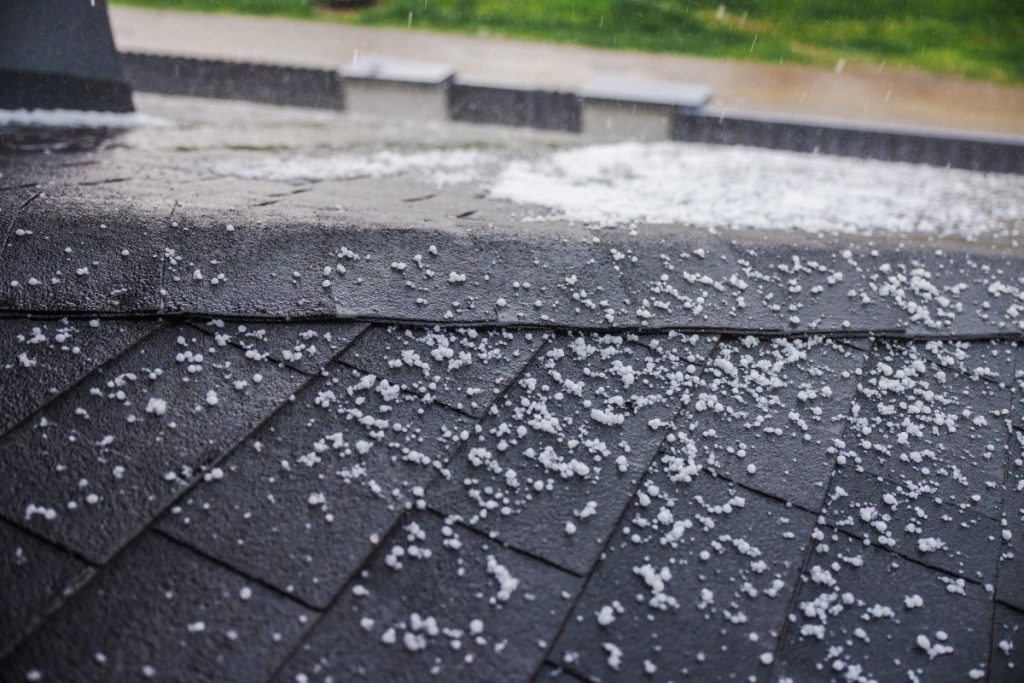
Asphalt shingles cover roughly 75 percent of homes in the U.S. and are coated in small protective granules that shield the material underneath from UV rays and moisture. When hail strikes, it can knock these granules loose or press them into the shingle, creating a soft spot known as bruising that often looks like nothing more than a slight discoloration from the ground. Other materials react differently: a metal roof tends to dent rather than tear, wood shakes can split, and clay tiles are more brittle and may simply break.
- Granule loss reduces UV protection over time
- Bruised areas are softer and more vulnerable to future impacts
- These marks are frequently missed during a quick visual check
2. Cracked or Split Shingles
Larger or harder hail can crack shingles outright, especially on roofs that are already a few years old and slightly more brittle. A cracked shingle no longer forms a sealed barrier, which means wind and rain have a direct path underneath it during the next storm.
3. Weakened Seals and Flashing
Flashing and sealant around vents, chimneys, and roof edges are designed to keep water out at vulnerable transition points. Hail impacts can loosen or crack these seals without leaving an obvious mark, which is one reason flashing damage is so often overlooked until a leak shows up inside the home.
4. Damage to Gutters, Vents, and Soft Metals
Hail does not stop at the shingles. Gutters, roof vents, and other soft metal components can dent or crack during a hailstorm, which affects how well water drains away from your roofline and foundation.
- Dented gutters may no longer channel water correctly
- Damaged vents can allow moisture into the attic space
- Soft metal flashing is especially prone to denting
- Keeping gutters clear of debris helps prevent water from backing up onto the roof after a storm
5. Long Term Water Intrusion
The most serious hail damage is often the kind that develops slowly. Small cracks and weakened seals allow tiny amounts of moisture to seep in after each rainfall, gradually leading to rot, mold, or insulation damage long after the original storm has been forgotten.
Each of these issues can start small, but they rarely stay that way. A roof that looks intact right after a storm can still be carrying damage that only becomes obvious months later, which is why a professional look is so valuable in the days following any hail event.
How to Spot Hail Damage Before It Becomes a Bigger Problem
Most homeowners are not trained to identify hail damage, and that is completely understandable since much of it is not visible from a ladder or the ground. Knowing the general signs to look for, and understanding the limits of a visual check, can help you decide when it is time to call in a professional.
Signs to Look for From the Ground
- Dented gutters, downspouts, or roof vents
- Missing or displaced granules collecting near downspouts
- Visible dents on soft metal features like flashing or vent caps
- Dents on garage doors or other parts of your home’s exterior, which often mean the roof took a similar hit
- Damaged or bruised siding, which often mirrors roof level impact
Signs a Professional Inspection Will Catch
- Bruised or soft spots on individual shingles
- Cracked seals around chimneys, skylights, and vents
- Early signs of moisture in the attic or interior leaks along the ceiling
- Impact patterns that indicate the direction and severity of the storm, generally averaging 7 to 10 marks within a 10×10 foot section of roof
A visual check from the ground is a reasonable first step, but it rarely tells the full story. A trained eye knows exactly where hail damage tends to hide, which is why a full property inspection after a storm is one of the most valuable things a homeowner can do for their roof. This is especially true in Des Moines and surrounding areas, where roofs regularly face a mix of hail, wind, and temperature swings that can compound minor damage into bigger issues over a single storm season.
Small Hail vs Large Hail: Why Size Is Not the Whole Story
It is easy to assume that only large hail causes real damage, but roofing materials do not always agree with that assumption. Smaller hail falling at high speed, or falling repeatedly during a longer storm, can sometimes cause more cumulative harm than a shorter burst of larger stones. Comparing the two side by side helps explain why size alone should never be the deciding factor in whether to get a roof checked.
| Factor | Small Hail | Large Hail |
| Visibility of damage | Often subtle, easy to miss | Usually more obvious |
| Speed and duration | Can fall longer, causing repeated impact | Often shorter bursts |
| Common damage type | Granule loss, soft bruising | Cracks, splits, dents |
| Risk of being overlooked | Higher, due to subtle signs | Lower, damage is more visible |
The takeaway is simple: hail size is only one part of the equation. Duration, wind angle, and the age of your roofing materials all play a role in how much damage actually occurs, which is why every hailstorm is worth a second look regardless of how the hail looked while it was falling. Repairing hail damage typically costs around $4,250 on average nationwide, though the price can range from about $375 for minor repairs to $7,500 or more for extensive storm damage, depending on the size of the affected areas and the materials involved. Homeowners across Des Moines and surrounding areas often deal with several hail events in a single season, so even storms that felt minor at the time are worth adding to the list of things to have checked before the cost of repair grows.
Protect Your Home Before Hail Damage Gets Worse
Hail damage rarely announces itself right away, and that delay is exactly what makes it so costly for homeowners who skip the inspection step. Even minor roof damage can turn into a leak, a mold issue, or the need for a new roof a year from now if it goes unnoticed. Photographing any visible damage to your roof or home’s exterior makes the claims process with your insurance company much smoother, and keeping nearby trees pruned can reduce the chance of added storm damage in future weather events.
At First Fruits Construction, we believe every homeowner deserves a clear, honest look at what is actually happening on their roof, without pressure and without guesswork. As an experienced roofing contractor serving the area, our team provides full property inspections, explains what we find, and walks you through your options so you can make a confident decision about repairing hail damage or replacing your roof. If a storm recently hit and left you wondering whether your roof came through unscathed, do not wait for a small problem to turn into structural damage. Contact us today and let us help you protect your home for years to come.
Discover Better Roofing Today!
"*" indicates required fields
"Whatever you do, work at it with all your heart"
Colossians 3:23